
Last Updated: September 7, 2026. If you live in Arrowhead, Windsor Park, or almost anywhere on Xenia's north and east sides, there's a good chance your house was built in the years right after April 3, 1974. That rebuild left Xenia with more 1970s homes than any other decade, and those houses have a specific set of materials: textured ceilings, wood paneling, aluminum window tracks, sheet vinyl, and original tile, that don't respond well to a generic "spray and scrub" routine. This is the room-by-room approach we use in Xenia's 1970s homes, including the two safety checks that come before any of it.
Jump to: Why so many Xenia homes are from the 1970s · Two checks before you start · Ceilings and fans · Wood paneling and trim · Registers and the furnace filter · Bathrooms and Xenia's hard water · Aluminum window tracks · Floors by material · Laminate counters and original cabinets · When to call a crew · FAQ
Why So Many Xenia Homes Date to the 1970s
The F5 tornado that hit Xenia on the afternoon of April 3, 1974 destroyed roughly half the buildings in the city. Reporting from the 50th anniversary put the residential toll at more than 1,200 homes condemned, with around 10,000 people left homeless. Arrowhead and Windsor Park were flattened outright, and the current Xenia High School on Kinsey Road opened in 1977 to replace the one the storm took.
The rebuild happened fast, and the numbers still show it. Census housing data for the city puts the 1970s as the single largest decade of construction in Xenia: about 23 percent of all housing units, or roughly one home in four. Nationally, the 1970s account for closer to one in seven. So while the East Second Street Historic District still has its Italianate and Queen Anne houses, a huge share of Xenia lives in a ranch, split-level, or tri-level that went up between 1974 and 1980.
That matters for cleaning because 1970s construction has a recognizable material list: spray-textured "popcorn" ceilings, dark wood paneling, aluminum-framed sliding windows and patio doors, sheet vinyl and linoleum floors, 4-inch ceramic tile with original grout, laminate countertops, forced-air furnaces with floor registers, and chrome or brass fixtures that have spent decades under Xenia's very hard water. Each of those has a right way and a wrong way to clean it.
Two Checks Before You Start
Two things in a mid-1970s house deserve a pause before you touch them, and both are handled with the same rule: clean the surface, never disturb it.
- Textured ceilings. Spray-on ceiling texture applied before the early 1980s can contain asbestos. It's harmless while it stays put, so dusting is fine. But sanding, scraping, wet-scrubbing, or patching it is not. If a ceiling is flaking, or you're planning to remove it, have a sample tested by a lab first. Ohio EPA lists accredited labs, and a test is inexpensive compared with the alternative.
- Painted surfaces. Homes built before 1978 may have lead-based paint under later coats. Intact paint is safe to wipe with a damp cloth. What you want to avoid is dry-sanding or scraping chipping paint on trim, windowsills, or doors, which turns it into dust. If paint is failing, wet-wipe the area, bag the cloth, and leave the repair to a certified renovator.
Neither of these should stop you from cleaning a 1970s house. They just decide the method: dust and damp-wipe, don't abrade.
Step 1: Ceilings and Fans
Start at the top so anything you knock loose lands on surfaces you haven't cleaned yet. For a textured ceiling, use an extendable microfiber duster or the soft brush attachment on a vacuum, and keep the pressure light: the texture crumbles if you lean into it. Work the corners first, where cobwebs collect, then sweep the field of the ceiling in overlapping passes.
Never take water to a popcorn ceiling. The texture is essentially drywall compound, and it softens, streaks, and can pull away from the ceiling when it gets wet. If there's a genuine stain, it gets painted over with a stain-blocking primer after the ceiling has been tested, not washed.
Ceiling fans are common in these houses. Slip an old pillowcase over each blade and pull it back so the dust stays inside the case instead of drifting down onto the bed or couch, then wipe the motor housing with a barely damp cloth.
Step 2: Wood Paneling and Dark Trim
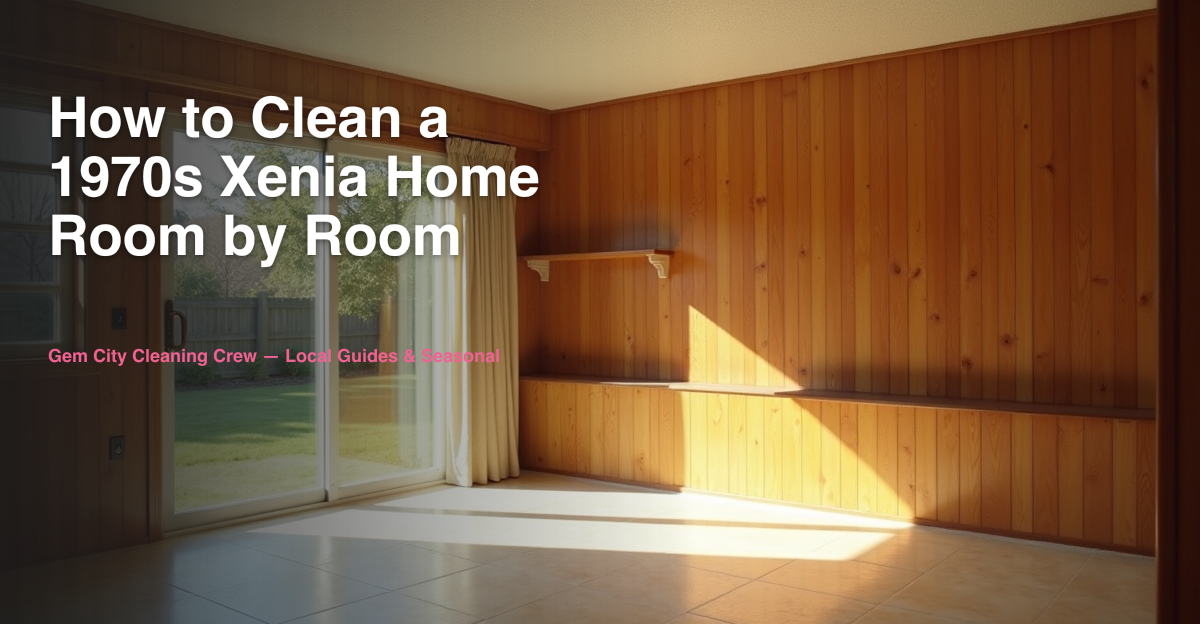
A lot of Xenia's rebuild-era family rooms and basements still have their original paneling. Dust it first with a dry microfiber cloth, working with the grain and paying attention to the grooves, where dust settles and shows. Then wipe with a cloth wrung nearly dry in a bucket of warm water and a few drops of dish soap, and follow immediately with a dry cloth.
The two things that damage paneling are standing moisture, which swells the veneer and lifts it at the seams, and anything abrasive, which scratches the finish. Skip magic erasers, scouring pads, and all-purpose sprays with ammonia. If the paneling looks dull after cleaning, a light coat of a wood conditioner brings the color back, but apply it sparingly and buff it off: a heavy coat attracts more dust than it hides.
Step 3: Floor Registers, Returns, and the Furnace Filter
Most 1970s Xenia homes heat and cool with a forced-air furnace and floor registers. Those registers are the dustiest thing in the house, and they're also the easiest to pull.
- Lift each floor register out and wash it in the sink or tub with warm, soapy water. Dry it completely before it goes back: a damp register drops rust flakes into the duct.
- Vacuum the first foot of the duct opening with a crevice tool. You'll pull out a surprising amount of grit, pet hair, and the occasional toy. Don't go deeper than the hose reaches; that's a duct cleaner's job.
- Vacuum the return-air grille from the outside, then unscrew it if you can and wipe the inside face.
- Change the furnace filter. Every 60 to 90 days is the standard rule, but Xenia is ringed by farmland, and harvest season from September into November puts a lot of field dust in the air. During harvest and spring pollen, check the filter monthly. A filter you can't see light through is past due.
Step 4: Bathrooms and Xenia's 23-Grain Water
This is the step that separates Xenia from its neighbors. The City of Xenia's water plant doesn't soften its water, and the city's own consumer confidence report puts total hardness near 400 mg/L, about 23 grains per gallon, which is squarely in the "very hard" range. Greene County's new softening system brought county water customers in places like Beavercreek down to about 8 grains in 2025, but Xenia runs its own system and wasn't part of it. If you moved here from a softened-water suburb and your shower glass is suddenly white a week after cleaning, that's why.
In a 1970s bathroom that scale lands on 4-inch ceramic tile, original grout, chrome fixtures, and often a cast-iron tub whose enamel has thinned with age. The rules:
- No abrasive powders or steel wool on the tub or tile. Worn enamel scratches, and scratched enamel holds stains permanently.
- Diluted white vinegar (half water, half vinegar) dissolves scale on chrome, glass, and glazed ceramic tile. Spray, wait 10 minutes, wipe, rinse, and dry. Drying is the step everyone skips and the one that keeps spots from coming right back.
- Keep vinegar off unsealed grout and natural stone. Acid eats cement grout over time and etches marble or travertine. For grout, use the baking soda and peroxide paste from our grout and tile guide, and reseal grout every 12 to 18 months.
- Unscrew faucet aerators and the showerhead and soak them in vinegar for an hour. Low pressure in an old bathroom is usually scale, not plumbing.
For stubborn, years-old buildup on fixtures and glass, our guide to removing hard-water stains from bathroom fixtures goes deeper on what works and what damages the finish.
Step 5: Aluminum Window Tracks and Sliding Doors
Aluminum-framed sliders were the standard window in the rebuild years, and their tracks collect dirt, dead insects, and mildew like nothing else in the house. Vacuum the track with a crevice tool first, then scrub with an old toothbrush and warm, soapy water, and wipe out the sludge with a rag wrapped around a butter knife for the corners.
Skip vinegar and other acidic cleaners here. Acids pit and dull anodized aluminum, and once the finish is gone it never looks clean again. After the track is dry, clear the small weep holes on the exterior sill with a toothpick so rain drains out instead of pooling, and a quick spray of silicone lubricant on the track keeps the sash sliding without dragging grit back in.
Step 6: Floors by Material
| Floor | Do | Don't |
|---|---|---|
| Sheet vinyl / linoleum | Sweep, then damp-mop with a pH-neutral floor cleaner. Rinse if the floor looks hazy. | Steam mop (lifts the glue and seams), vinegar every week (dulls the finish), abrasive pads. |
| 9-inch vinyl tiles (often in basements) | Damp-mop and leave them intact. Tiles from this era may contain asbestos and are safe in place. | Sand, grind, or pry up loose tiles yourself. |
| Hardwood or parquet | Vacuum with the beater bar off, then a barely damp microfiber mop with a hardwood cleaner. | Wet mopping, steam, or oil soaps that build up a tacky film. |
| Carpet | Vacuum slowly in two directions; a HEPA vacuum helps with harvest dust and pollen. | Over-wetting during spot cleaning: it wicks stains back up as it dries. |
If the house has had carpet since the 1970s, there's a fair chance hardwood or parquet is underneath. It's worth checking a closet corner before you decide the carpet is worth deep-cleaning.
Step 7: Laminate Counters and Original Cabinets
Laminate countertops handle daily wiping fine but hate two things: abrasives, which scratch the pattern layer, and bleach or oven cleaner, which discolor it. Warm soapy water and a soft cloth handle almost everything, and a paste of baking soda and water lifts the occasional coffee or tomato stain if it sits for a few minutes.
Original cabinet fronts collect a film of kitchen grease that plain dusting won't move. Wipe them with a dish-soap solution, working top to bottom, and rinse with a clean damp cloth so the soap doesn't leave its own haze. Don't forget the range hood: a 1970s hood filter that hasn't been out in years is usually the source of the smell people blame on the trash can. Pull it, soak it in hot water and degreaser, and let it dry fully before it goes back.
When It's Worth Calling a Crew
All of this is doable on your own, one Saturday at a time. Where a crew earns its keep is the first clean after buying an Arrowhead or Windsor Park home that hasn't been descaled in a decade, the move-out clean on a rental, or a recurring visit that keeps the scale, register dust, and window tracks from ever building back up. We clean a lot of Xenia's 1970s houses, and every one of them gets the same rules above: dust the ceilings, descale the bathrooms, and never abrade an original surface.
Want the first deep clean handled by people who know these houses? Get a free quote: no contracts, no obligation.
Related reading: house cleaning services in Xenia · removing hard-water stains from fixtures · cleaning grout and tile without damage · how to prep your home before a cleaning crew arrives.
FAQ: Cleaning a 1970s Home in Xenia
Is it safe to clean a popcorn ceiling in a 1970s house?
Yes, as long as you only dust it. Textured ceilings applied before the early 1980s may contain asbestos, which is harmless while the texture stays intact but becomes a hazard when it's sanded, scraped, or wet-scrubbed into dust. Use a soft microfiber duster or a vacuum brush attachment with light pressure, never water, and have the ceiling tested before any repair or removal.
How do you clean 1970s wood paneling without damaging it?
Dust it dry with microfiber, then wipe with a cloth wrung nearly dry in warm water and a few drops of dish soap, following the grain and drying immediately. Standing moisture swells the veneer and lifts seams, and abrasive pads or ammonia sprays scratch and dull the finish. A very light coat of wood conditioner, buffed off, restores color if the panels look dry.
Why do my faucets and shower glass get white spots so fast in Xenia?
Because Xenia's city water is very hard and isn't softened at the plant. The City of Xenia's consumer confidence report puts total hardness near 400 mg/L, roughly 23 grains per gallon, compared with about 8 grains for Greene County's softened county water in Beavercreek. Diluted white vinegar dissolves the scale on chrome and glass; wiping fixtures dry after each use is what keeps it from returning.
How do you clean old aluminum window tracks?
Vacuum the loose grit with a crevice tool, scrub with an old toothbrush and warm soapy water, and wipe the sludge out with a rag around a butter knife. Avoid vinegar and other acids, which pit and dull anodized aluminum. Once dry, clear the exterior weep holes with a toothpick and lightly spray the track with silicone lubricant.
How often should I clean floor registers and change the furnace filter?
Wash floor registers two or three times a year and change a standard furnace filter every 60 to 90 days. In Xenia, check it monthly during fall harvest (September through November) and spring pollen season, since the farmland around the city puts far more dust in the air than a typical suburb. If you can't see light through the filter, replace it.
Can I use a steam mop on a 1970s vinyl or linoleum floor?
No. Steam softens the adhesive under sheet vinyl and linoleum, which leads to lifted seams and bubbles, and it can drive moisture into the subfloor. Sweep and damp-mop with a pH-neutral floor cleaner instead. If the floor is 9-inch vinyl tile, leave the tiles intact and never sand or grind them, since tiles from that era may contain asbestos.
How much of Xenia was rebuilt after the 1974 tornado?
The April 3, 1974 tornado destroyed roughly half the buildings in the city, and reporting from the 50th anniversary counted more than 1,200 homes condemned. Arrowhead and Windsor Park were rebuilt almost entirely, and today the 1970s are the single largest decade in Xenia's housing stock, about one home in four, according to census housing data, which is why so much of the city shares the same cleaning quirks.